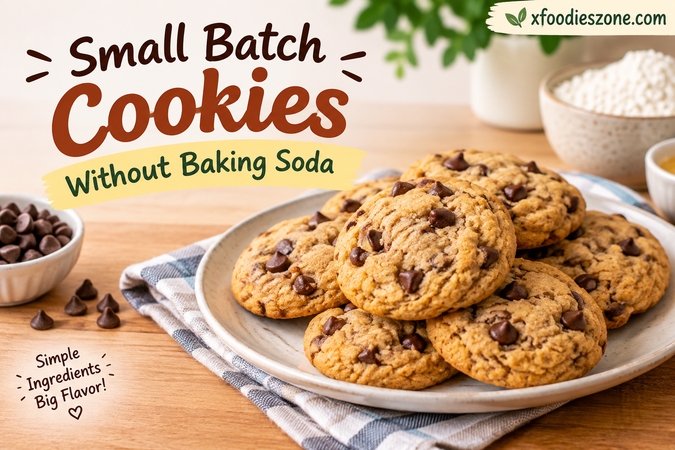
Sometimes you want a few homemade cookies without making a huge batch. Maybe you are baking for yourself, sharing with one or two people, or simply craving something sweet without ending up with a container full of leftovers. That is exactly where small batch cookies without baking soda come in handy.
These cookies are simple, buttery, soft in the middle, and lightly crisp around the edges. The best part is that you do not need baking soda to make them. With a handful of everyday ingredients and a small amount of dough, you can have fresh cookies ready without a complicated recipe.
Baking soda is commonly used in cookie recipes to help with spreading, browning, and texture. However, you can make delicious cookies without it. The key is using the right ingredients and handling the dough properly. For this small batch recipe, baking powder provides the leavening needed to give the cookies a pleasant texture.
Whether you are looking for small batch cookies without baking soda because you ran out of baking soda or simply prefer baking without it, this recipe is worth keeping.
Why Make Small Batch Cookies Without Baking Soda?
There are plenty of reasons to make a small batch instead of a traditional cookie recipe.
First, a small batch is convenient. You do not need to measure large amounts of ingredients, and there is less cleanup afterward. It is also perfect when you only want four to eight cookies rather than several dozen.
Another advantage is portion control. Freshly baked cookies are hard to resist, and having a smaller batch means you can enjoy a homemade treat without filling the kitchen with dozens of cookies.
Making cookies without baking soda can also be useful when your pantry is running low. Instead of making a trip to the store, you can use baking powder as an alternative leavening ingredient.
These small batch cookies without baking soda are especially useful for:
- A quick dessert
- Small households
- Late-night cookie cravings
- Baking for two
- Testing a new recipe
- Using simple pantry ingredients
- Avoiding leftover cookies
Ingredients for Small Batch Cookies Without Baking Soda
You only need a few basic ingredients to make these cookies. The recipe is intentionally small, so each ingredient has an important job.
Butter
Use softened unsalted butter for the best control over the salt level. Butter gives the cookies their rich flavor and helps create a tender texture.
Allow the butter to soften naturally at room temperature. It should be soft enough to mix easily but not melted.
Granulated Sugar
Granulated sugar adds sweetness and contributes to the lightly crisp edges of the cookies. It also helps the cookies spread while baking.
Egg Yolk
Instead of using a whole egg, this small batch recipe uses an egg yolk. A whole egg can add too much liquid for such a small quantity of dough. The yolk adds richness and helps bind the ingredients together.
You can save the remaining egg white for another recipe.
Vanilla Extract
A little vanilla extract makes a noticeable difference. It gives the cookies a warm, classic homemade flavor.
All-Purpose Flour
Regular all-purpose flour works well for this recipe. Measure it carefully because too much flour can make small batch cookies dry or crumbly.
Baking Powder
Since these are cookies without baking soda, baking powder provides the leavening. You only need a small amount.
Salt
A pinch of salt balances the sweetness and brings out the buttery flavor.
Chocolate Chips
Chocolate chips are optional but highly recommended. Semi-sweet chocolate chips are a classic choice, although milk chocolate or dark chocolate can also work.
How to Make Small Batch Cookies Without Baking Soda
Making these cookies is straightforward and does not require any special equipment.
Step 1: Prepare the Oven
Preheat your oven to 350°F (175°C). Line a small baking sheet with parchment paper.
If you do not have parchment paper, lightly grease the baking sheet.
Step 2: Cream the Butter and Sugar
Place the softened butter and sugar in a small bowl. Mix until the mixture looks smooth and creamy.
Because this is a small batch, you can easily mix the dough by hand with a spoon or use a small electric mixer.
Do not worry if the mixture does not look exactly like a large batch of cookie dough. Small quantities can be slightly different in appearance.
Step 3: Add the Egg Yolk and Vanilla
Add the egg yolk and vanilla extract. Mix until everything is well combined.
The mixture should become smooth and slightly creamy.
Step 4: Add the Dry Ingredients
In a separate small bowl, combine the flour, baking powder, and salt.
Gradually add the dry ingredients to the butter mixture. Stir just until the dough comes together.
Avoid overmixing. Once you no longer see dry flour, stop mixing.
Step 5: Add Chocolate Chips
Fold in the chocolate chips if you are using them.
You can add more or fewer chocolate chips depending on how chocolatey you want your cookies.
Step 6: Shape the Dough
Divide the dough into small portions and roll each portion into a ball.
Place the dough balls on your prepared baking sheet, leaving some space between them.
Gently flatten each ball with your fingers or the bottom of a glass. The cookies will spread slightly during baking.
Step 7: Bake
Bake the cookies for approximately 9 to 12 minutes, depending on their size and your oven.
Look for lightly golden edges while the centers remain soft.
Do not wait until the entire cookie turns dark golden. Cookies continue to firm up as they cool.
Step 8: Cool
Let the cookies rest on the baking sheet for several minutes after removing them from the oven.
Then transfer them to a wire rack.
They may seem very soft when they first come out of the oven, but this is normal. As they cool, the texture will become firmer.
What Do Cookies Taste Like Without Baking Soda?
Cookies made without baking soda can still taste just as delicious as traditional cookies.
The texture may be slightly different depending on the ingredients and baking method. Baking soda often encourages cookies to spread and brown, while baking powder tends to create a somewhat softer and more rounded cookie.
For this reason, small batch cookies without baking soda can have lightly crisp edges with a soft, buttery center.
The flavor comes primarily from the butter, sugar, vanilla, and chocolate chips, so the absence of baking soda does not mean the cookies will taste bland.
Baking Soda vs. Baking Powder in Cookies
Baking soda and baking powder are both leavening agents, but they are not identical.
Baking soda is sodium bicarbonate and generally requires an acidic ingredient to react effectively. Baking powder contains an acid component along with a base, allowing it to produce carbon dioxide when mixed with moisture and exposed to heat.
Because of these differences, you should not always substitute one directly for the other.
For a recipe specifically designed as small batch cookies without baking soda, using baking powder in the correct quantity is a better approach than simply replacing baking soda with a random amount of baking powder.
Tips for Perfect Small Batch Cookies
A few simple details can make a big difference.
Measure Flour Carefully
Too much flour is one of the most common reasons cookies turn out dry.
For the most accurate results, use a kitchen scale. If you are using measuring cups, spoon the flour into the cup and level it rather than packing it down.
Use Softened Butter
Softened butter mixes more easily with sugar. Melted butter can change how the cookies spread and may produce a different texture.
Do Not Overmix
Once the flour has been incorporated, stop mixing. Overmixing can develop too much gluten and result in tougher cookies.
Watch the Baking Time
Small cookies can go from perfectly baked to overbaked very quickly.
Start checking them around the 9-minute mark. The edges should look set while the centers can still appear slightly soft.
Let Them Cool
Allowing the cookies to cool for a few minutes helps them finish setting. Moving them immediately can cause them to break.
Can You Make These Cookies Without Chocolate Chips?
Absolutely.
If you want simple sugar cookies, leave out the chocolate chips. You can also replace them with chopped chocolate, white chocolate chips, chopped nuts, raisins, or dried cranberries.
For a cinnamon version, add a small amount of ground cinnamon to the dry ingredients.
You can even sprinkle a little granulated sugar over the shaped dough before baking for a simple crunchy finish.
Small Batch Cookies Without Baking Soda Variations
One of the best things about a small cookie recipe is how easy it is to customize.
Chocolate Chunk Cookies
Replace chocolate chips with chopped chocolate. The irregular pieces create melted chocolate pockets throughout the cookies.
Cinnamon Sugar Cookies
Add cinnamon to the dough and roll the dough balls in cinnamon sugar before baking.
Peanut Butter Cookies
Add a small amount of creamy peanut butter to the dough and slightly reduce the butter to maintain a workable consistency.
White Chocolate Cookies
Use white chocolate chips for a sweeter, creamy variation.
Nutty Cookies
Add finely chopped walnuts or pecans. Toasting the nuts first can give them an even richer flavor.
Double Chocolate Cookies
For chocolate lovers, add cocoa powder to the dough and use chocolate chips for extra chocolate flavor.
How to Store Small Batch Cookies
Once completely cooled, store the cookies in an airtight container at room temperature.
They are best enjoyed within a few days, although the exact storage time depends on the ingredients and your environment.
If you want to keep them longer, freezing is a convenient option.
Place completely cooled cookies in a freezer-safe container or bag, separating layers with parchment paper. Thaw them at room temperature when you are ready to enjoy them.
You can also warm a thawed cookie briefly to bring back some of that fresh-baked softness.
Can You Freeze Cookie Dough?
Yes, cookie dough can usually be frozen.
Shape the dough into individual portions before freezing. Place the portions on a lined tray and freeze until firm. Then transfer them to a freezer-safe container.
When you want fresh cookies, you can bake the portions according to the recipe, allowing additional baking time if needed.
This makes the recipe even more convenient because you can prepare a small amount of dough ahead of time and bake cookies whenever the craving hits.
Why Did My Cookies Spread Too Much?
If your cookies spread excessively, the butter may have been too warm or melted.
The baking sheet temperature can also affect spreading. If you place cookie dough on a very hot baking sheet, the butter may melt quickly before the dough has time to set.
If your dough feels unusually soft, chilling it for about 15 to 30 minutes can help.
Remember that cookies are supposed to spread somewhat. The goal is to find the balance between a cookie that spreads naturally and one that turns into a very thin layer.
Why Are My Cookies Too Thick?
Cookies that remain very thick may contain too much flour or may not have been flattened enough before baking.
Make sure your flour measurement is accurate. You can also gently flatten the dough balls before placing them in the oven.
Because this is a small batch recipe, even a small difference in flour can noticeably affect the final texture.
Why Are My Cookies Dry?
Dry cookies are often caused by too much flour or overbaking.
Since the recipe produces only a small number of cookies, they do not need a long baking time.
Take them out when the edges are lightly golden and the centers still look slightly soft. They will continue cooking from residual heat on the baking sheet.
Frequently Asked Questions
Can I make cookies without baking soda?
Yes. Cookies can be made without baking soda. This recipe uses baking powder instead to provide leavening.
Can I use baking powder instead of baking soda?
Baking powder and baking soda behave differently, so they should not be substituted in equal amounts. A recipe designed specifically without baking soda is the safest approach.
How many cookies does this small batch recipe make?
Depending on the size of each dough portion, this recipe can make approximately 6 to 8 small-to-medium cookies.
Can I use salted butter?
Yes. If using salted butter, you can reduce or omit the additional salt in the recipe.
Can I make these cookies without an electric mixer?
Absolutely. Since this is a small batch, the butter and sugar can easily be mixed by hand with a sturdy spoon.
Why use an egg yolk instead of a whole egg?
A whole egg can add too much liquid to a small amount of cookie dough. An egg yolk adds richness without making the dough excessively wet.
Can I leave out the chocolate chips?
Yes. The cookies are delicious plain, or you can add another mix-in of your choice.
Do I need to chill the dough?
Not necessarily. However, if the dough feels very soft or your kitchen is warm, a short chill can make the dough easier to handle and help control spreading.
The Bottom Line
You do not need a large recipe or a fully stocked pantry to enjoy homemade cookies. These small batch cookies without baking soda are a practical option when you want something sweet, fresh, and easy to make.
With butter, sugar, flour, an egg yolk, vanilla, baking powder, and your favorite add-ins, you can create a small batch of cookies without relying on baking soda. They are simple enough for beginners but satisfying enough to become a regular favorite.
The key is to measure your ingredients carefully, avoid overmixing the dough, and watch the cookies closely toward the end of baking. Pull them from the oven when the edges are lightly golden and the centers are still soft.
Whether you are baking for two, satisfying a sudden cookie craving, or simply experimenting with a cookie recipe without baking soda, this small batch approach makes homemade baking feel easy and manageable.
And sometimes, that is exactly what you need: a warm cookie, a cup of coffee or milk, and no mountain of leftovers waiting on the counter.